


Shillong, Aug 7: A research group led by Dr. Ravi Ranjan Kumar from the Department of Geology, North-Eastern Hill University (NEHU), Shillong, has published a significant research paper titled “Potential Geoheritage Sites and Capacity Assessment for Sustainable Geotourism Development in Meghalaya, India” in the international journal Geoheritage (published by Springer). The journal is a Q2-ranked publication with an impact factor of 2.6.
The study focuses on the eastern part of Meghalaya and highlights 14 potential geoheritage, geosite, geotourism, and geo-mythological sites of scientific, educational, and tourism importance. This research highlights Shillong and its surrounding regions hold strong potential for eco-tourism, with tourist footfall increasing steadily year after year. This research aims to bring attention to several lesser-known but geologically and naturally significant locations beyond the popular Shillong–Cherrapunji circuit.
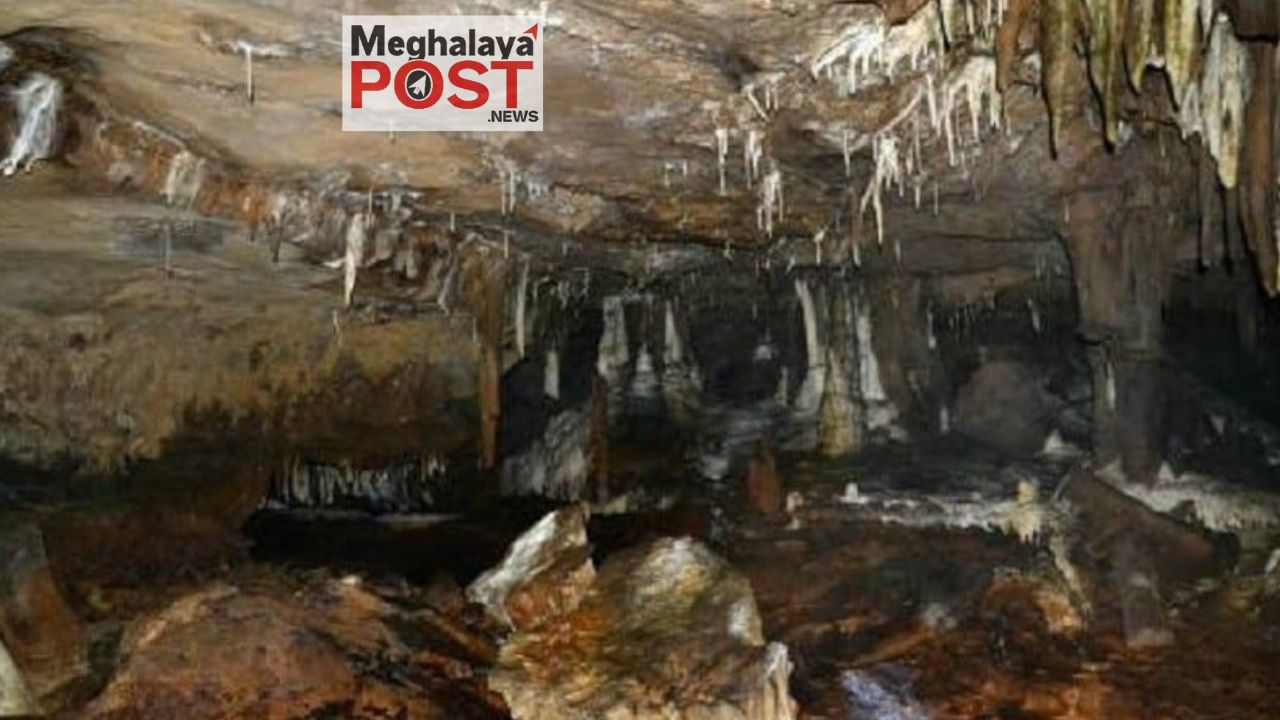
The Meghalaya Plateau is described as an outstanding geoheritage region that showcases remarkable diversity in rock formations, chronostratigraphic boundaries, landforms, and geo-mythological traditions of global significance. Key sites documented in the study include the famous Mawmluh Cave (the type locality of the Meghalayan Age, the uppermost stage of the Holocene Epoch dating back approximately 4,200 years) and the well-preserved Cretaceous–Paleogene (K-Pg) boundary section at Therriaghat. Other features covered include extensive karst systems, granitic batholiths, paleontological caves, distinctive sedimentary structures, and archaeologically important megaliths.
Also read:Seven Cops Injured In Hima Langrin Violence
Each site was systematically evaluated based on criteria recommended by the International Union of Geological Sciences (IUGS), considering scientific value, rarity, educational utility, economic potential, and tourism appeal. The findings underline the urgent need for formal recognition, geoconservation measures, and the development of a regional geopark framework to protect these vulnerable geological assets while promoting sustainable geotourism and socio-economic development in Northeast India.
Also watch:
The research is expected to contribute meaningfully to geoscience education, conservation planning, and responsible tourism promotion in the state.