


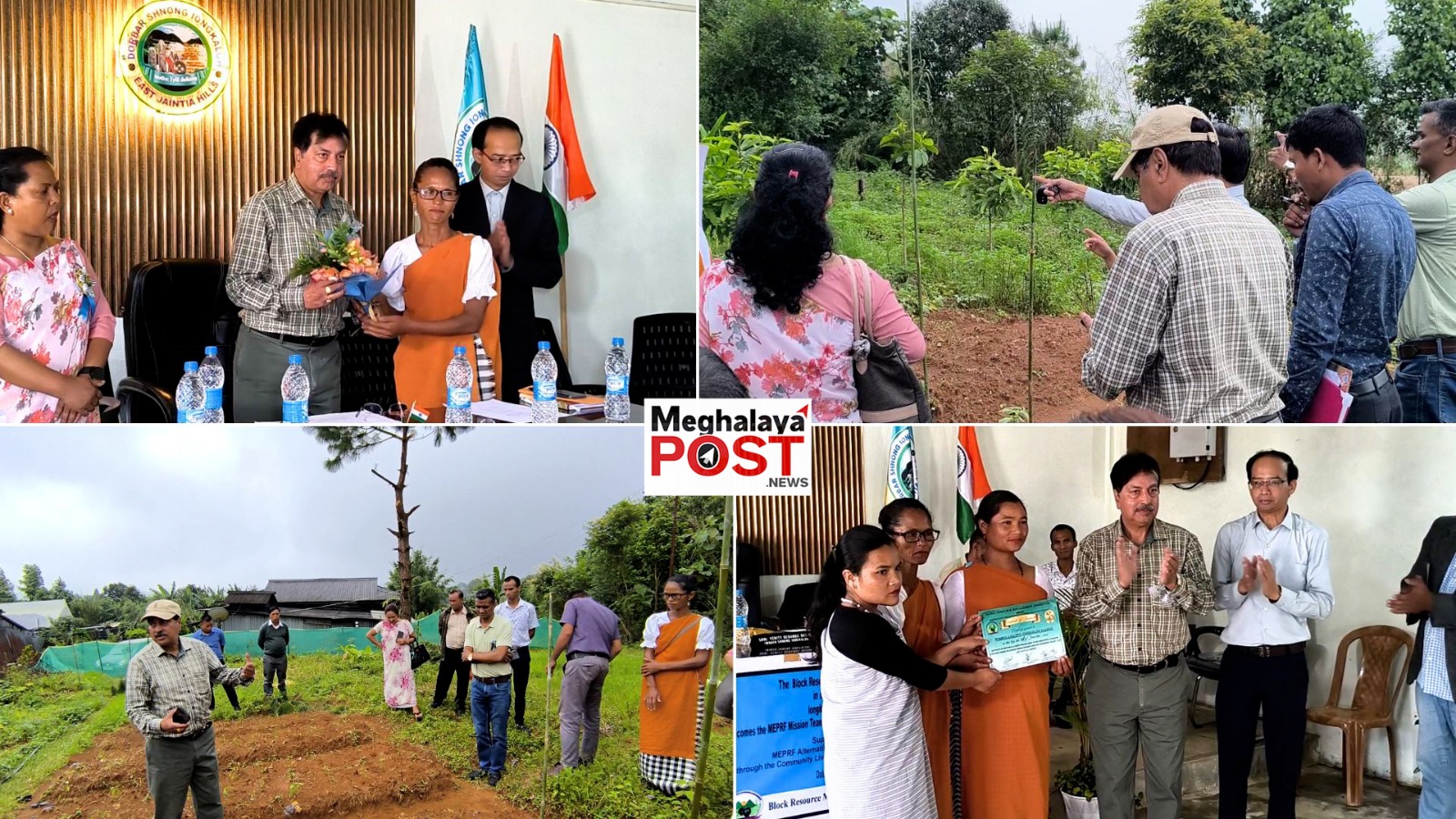
Khliehriat, June 25: The Block Resource Management Committee (BRMC), in collaboration with the Iongkaluh Farmer Producer Group (FPG), today extended a warm welcome to the MEPRF Mission Team during its visit to Iongkaluh Village in East Jaintia Hills District. The visit was conducted under the MEPRF Alternative Livelihood Programme through the Community Livelihood Improvement Project (CLIP).
The programme was attended by Shri Andy M. Laloo, Secretary of BRMC; Shri Naba Bhattacharjee, Technical Expert; the Headman of Iongkaluh Village; H. Lato, IFS, Conservator of Forests, State Forest Department, Government of Meghalaya; government officials, members of the Iongkaluh FPG, villagers, and other stakeholders.
As part of the event, Lakadong turmeric powder was presented to the visiting officials, followed by a traditional farming cultural dance and the distribution of certificates to members of the Farmer Producer Group. The programme concluded with a site inspection of the Iongkaluh FPG project area.
Speaking on the occasion, Shri Naba Bhattacharjee highlighted the immense potential of Lakadong turmeric, describing it as one of the most sought-after spices with significant opportunities for farmers in Meghalaya.
“Nothing is too small to begin with. Every plant starts from a seed,” he said. “Many people believe that coal is the only source of income in East Jaintia Hills, but that is a misconception. While mining remains important, not everyone can become a miner, doctor, or engineer. We must build on the strengths of our communities, and farming is one of our greatest strengths.”
Addressing the gathering, H. Lato, IFS, noted that coal mining has affected the livelihoods of many people, making alternative livelihood programmes increasingly important.
“When farmers work individually, they often have little bargaining power in the market. However, when they come together as a group, they gain several advantages,” he said. “BRMC not only promotes cultivation but also equips farmers with business planning skills. Through collective branding, local products can reach larger markets. The honey produced in Meghalaya is highly valued because it is natural and free from adulteration. Trust and cooperation are the foundations of every successful group. I am confident that within the next one to two years, this area will produce and market products under its own brand with BRMC’s support.”
Also read: Daka Bycycle Rally Pynlong Ka Ophis U DSO Nongpoh Ban Ong Em Ïa Ki Jingdih Pynbuaid
Shri Andy M. Laloo, Secretary of BRMC, emphasized the growing market demand for agricultural produce. He pointed out that hotels require vegetables such as cabbage, hostels need potatoes, while households regularly consume tomatoes, beans, and carrots—many of which are currently imported from Assam and West Bengal.
Explaining the concept of a Farmer Producer Group, he said that an FPG consists of 15 to 30 farmers cultivating similar crops, such as vegetables or turmeric, who collectively plan, produce, and market their products.
“When farmers unite, their production capacity increases significantly. For example, 20 farmers working together can produce thousands of quintals of ginger,” he said. “Financial institutions and government schemes are generally more willing to support organized groups than individuals. While challenges such as building trust and maintaining records remain, the long-term benefits of collective action are substantial.”
Also watch: