


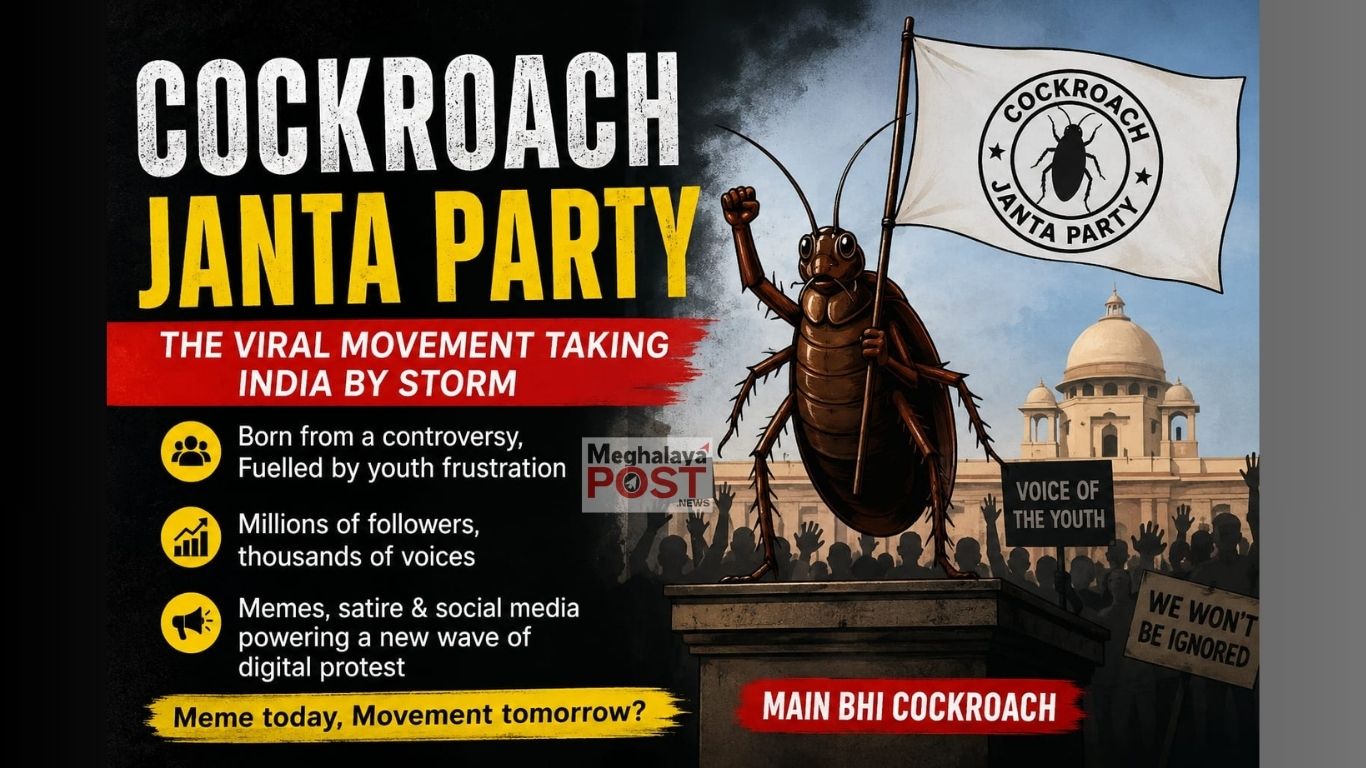
What started as a joke is now being discussed like a movement.
In the age of reels, memes, hashtags and viral outrage, India’s newest internet phenomenon — the Cockroach Janta Party (CJP) — has transformed from a sarcastic online reaction into one of the country’s most talked-about youth-driven digital movements.
The Cockroach Janta Party has become one of the most viral political trends currently dominating Indian social media.
For millions scrolling through Instagram and X late at night, CJP is not just another meme page anymore. It has become a symbol of frustration, rebellion, humour, and survival in a generation increasingly shaped by unemployment, academic pressure, inflation, and social media culture.
The movement exploded online shortly after controversial remarks made by Chief Justice of India Surya Kant during a Supreme Court hearing earlier this month. References comparing certain unemployed youth to “cockroaches” quickly triggered backlash, outrage, satire, and eventually one of the internet’s biggest viral trends.
But unlike most viral moments that disappear within hours, this one evolved.
Within a single day, memes flooded social media timelines. Soon after, a new identity emerged — the “Cockroach Janta Party.” What many initially assumed was just another internet joke unexpectedly began attracting massive public attention.
Founded by 30-year-old student Abhijeet Dipke, the movement embraced humour as its main political language. There were no traditional rallies, no party offices, and no conventional campaign speeches. Instead, the internet itself became the party headquarters.
Memes became manifestos.
Instagram reels became political messaging.
Comment sections became public forums.
Across social media, young Indians began calling themselves “cockroaches” sarcastically — turning an alleged insult into a badge of resilience. For many supporters, the movement represents a generation that feels ignored, overworked, underemployed, and constantly judged.
What makes CJP different from traditional political platforms is not ideology, but relatability.
Unlike mainstream parties built through years of organisation and ground campaigns, the Cockroach Janta Party spread entirely through digital culture — viral edits, parody posters, AI-generated campaign art, reaction memes, dark humour, and emotional online storytelling.
Within days, state-wise supporter pages and parody political accounts began appearing across India. From Delhi to Kerala, Meghalaya to Maharashtra, regional meme pages started creating local versions of CJP content, adding state-specific humour, slogans, and political satire. The movement became less about one organisation and more about a collective internet identity.
Political observers believe the phenomenon reflects a deeper shift in Indian politics, especially among Gen Z users who increasingly consume politics through social media rather than television debates or public rallies.
For many young people, CJP is not necessarily about contesting elections. It is about expressing anger in a language the internet understands — humour.
Online discussions linked to the movement frequently revolve around unemployment, examination pressure, rising living costs, mental stress, and the feeling of being disconnected from those in power. In many ways, the movement mirrors the anxieties of an entire generation trying to survive in an intensely competitive digital era.
At the same time, the movement has sparked serious controversy.
Critics argue that CJP may simply be another short-lived viral trend amplified by algorithms and online hype. Others question whether meme culture can genuinely influence political discourse in the real world.
Supporters disagree.
They argue that even if the movement never becomes an actual political party, it has already succeeded in doing something powerful — forcing people to talk openly about youth frustration in modern India.
The controversy intensified further after the movement’s account on X (formerly Twitter) was reportedly withheld in India. Shortly afterwards, founder Abhijeet Dipke launched another account titled “Cockroach Is Back” with the slogan:
“Cockroaches Don’t Die.”
Ironically, the slogan only pushed the movement deeper into viral territory.
Despite its massive online popularity, the Cockroach Janta Party is still not officially registered with the Election Commission of India. Whether it eventually becomes a serious political force or fades away as another chapter in internet history remains uncertain.
But one reality is already impossible to ignore:
India’s youth are no longer expressing frustration through only protests and speeches.
Now, they are doing it through memes.